Es mostren els missatges amb l'etiqueta de comentaris sXIX. Mostrar tots els missatges

dilluns, 18 d’abril del 2022

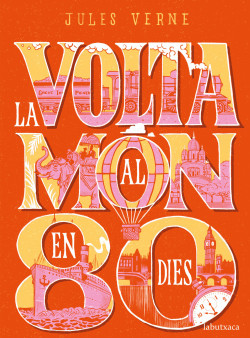
La volta al món en 80 dies de Jules Verne (1872)


El clàssic de Jules Verne traduït per Jesús Moncada.

El 2 d’octubre de 1872, Phileas Fogg fa una aposta insòlita mentre juga a cartes amb els seus companys del Reform-Club de Londres: està disposat a fer la volta al món en només vuitanta dies. Aquell vespre, amb el seu criat Passepartout, emprèn el viatge que l’ha de dur a Suez, Bombai, Calcuta, Hong Kong, Yokohama, San Francisco i Nova York, abans de tornar a Londres. ¿Aconseguirà ser de nou al club el 21 de desembre, a tres quarts de nou del vespre?

dilluns, 9 de setembre del 2019

Treasure Island de Robert Louis Stevenson (1883)


 I got bodily into the apple barrel, and found there was scarce an apple left; but sitting down there in the dark, what with the sound of the waters and the rocking movement of the ship, I had either fallen asleep or was on the point of doing so when a heavy man sat down with rather a clash close by. The barrel shook as he leaned his shoulders against it, and I was just about to jump up when the man began to speak. It was Silver's voice, and before I had heard a dozen words, I would not have shown myself for all the world, but lay there, trembling and listening, in the extreme of fear and curiosity, for from these dozen words I understood that the lives of all the honest men aboard depended upon me alone.

diumenge, 4 de febrer del 2018

Jane Eyre de Charlotte Brontë (1847)


Jane Eyre, òrfena de molt petita, aprèn aviat a afrontar els entrebancs que la vida li presenta, primer sota la tutela de la seva rica i malèvola tieta Reed, i anys després sota el règim opressiu de l'orfenat Lowood, on passarà de ser una nena estoica, maltractada i abnegada a una dona intel·lectual i apassionada amb dificultats per trobar el seu lloc en el món. Modesta, incòmoda, franca, independent, rebel davant de les injustícies i amb una inquietud intel·lectual no sempre ben entesa, escapa del seu destí quan se li presenta l'oportunitat de fer d'institutriu a casa de Lord Rochester. Però les coses no seran tan fàcils com semblen.Jane Eyre, novel·la gòtica per excel·lència, presenta el retrat d'una dona que, amb inusual franquesa i un apassionat sentit de la dignitat i la justícia, refusa d'acceptar la plaça que la societat li adjudica.

dilluns, 27 de novembre del 2017

Cims borrascosos d'Emily Brontë (1847)

Edgar Linton had a sweet, low manner of speaking, and pronounced his words as you do: that’s less gruff than we talk here, and softer.

‘I’m not come too soon, am I?’ he said, casting a look at me: I had begun to wipe the plate, and tidy some drawers at the far end in the dresser.

‘No,’ answered Catherine.  ‘What are you doing there, Nelly?’

‘My work, Miss,’ I replied.  (Mr. Hindley had given me directions to make a third party in any private visits Linton chose to pay.)

She stepped behind me and whispered crossly, ‘Take yourself and your dusters off; when company are in the house, servants don’t commence scouring and cleaning in the room where they are!’

‘It’s a good opportunity, now that master is away,’ I answered aloud: ‘he hates me to be fidgeting over these things in his presence.  I’m sure Mr. Edgar will excuse me.’

‘I hate you to be fidgeting in my presence,’ exclaimed the young lady imperiously, not allowing her guest time to speak: she had failed to recover her equanimity since the little dispute with Heathcliff.

‘I’m sorry for it, Miss Catherine,’ was my response; and I proceeded assiduously with my occupation.

She, supposing Edgar could not see her, snatched the cloth from my hand, and pinched me, with a prolonged wrench, very spitefully on the arm.  I’ve said I did not love her, and rather relished mortifying her vanity now and then: besides, she hurt me extremely; so I started up from my knees, and screamed out, ‘Oh, Miss, that’s a nasty trick!  You have no right to nip me, and I’m not going to bear it.’

‘I didn’t touch you, you lying creature!’ cried she, her fingers tingling to repeat the act, and her ears red with rage.  She never had power to conceal her passion, it always set her whole complexion in a blaze.

‘What’s that, then?’ I retorted, showing a decided purple witness to refute her.

She stamped her foot, wavered a moment, and then, irresistibly impelled by the naughty spirit within her, slapped me on the cheek: a stinging blow that filled both eyes with water.

‘Catherine, love!  Catherine!’ interposed Linton, greatly shocked at the double fault of falsehood and violence which his idol had committed.

‘Leave the room, Ellen!’ she repeated, trembling all over.

Little Hareton, who followed me everywhere, and was sitting near me on the floor, at seeing my tears commenced crying himself, and sobbed out complaints against ‘wicked aunt Cathy,’ which drew her fury on to his unlucky head: she seized his shoulders, and shook him till the poor child waxed livid, and Edgar thoughtlessly laid hold of her hands to deliver him.  In an instant one was wrung free, and the astonished young man felt it applied over his own ear in a way that could not be mistaken for jest.  He drew back in consternation.  I lifted Hareton in my arms, and walked off to the kitchen with him, leaving the door of communication open, for I was curious to watch how they would settle their disagreement.  The insulted visitor moved to the spot where he had laid his hat, pale and with a quivering lip.

‘That’s right!’ I said to myself.  ‘Take warning and begone!  It’s a kindness to let you have a glimpse of her genuine disposition.’

‘Where are you going?’ demanded Catherine, advancing to the door.

He swerved aside, and attempted to pass.

‘You must not go!’ she exclaimed, energetically.

‘I must and shall!’ he replied in a subdued voice.

‘No,’ she persisted, grasping the handle; ‘not yet, Edgar Linton: sit down; you shall not leave me in that temper.  I should be miserable all night, and I won’t be miserable for you!’

‘Can I stay after you have struck me?’ asked Linton.

Catherine was mute.

‘You’ve made me afraid and ashamed of you,’ he continued; ‘I’ll not come here again!’

Her eyes began to glisten and her lids to twinkle.

‘And you told a deliberate untruth!’ he said.

‘I didn’t!’ she cried, recovering her speech; ‘I did nothing deliberately.  Well, go, if you please—get away!  And now I’ll cry—I’ll cry myself sick!’

She dropped down on her knees by a chair, and set to weeping in serious earnest.  Edgar persevered in his resolution as far as the court; there he lingered.  I resolved to encourage him.

‘Miss is dreadfully wayward, sir,’ I called out.  ‘As bad as any marred child: you’d better be riding home, or else she will be sick, only to grieve us.’

The soft thing looked askance through the window: he possessed the power to depart as much as a cat possesses the power to leave a mouse half killed, or a bird half eaten.  Ah, I thought, there will be no saving him: he’s doomed, and flies to his fate!  And so it was: he turned abruptly, hastened into the house again, shut the door behind him; and when I went in a while after to inform them that Earnshaw had come home rabid drunk, ready to pull the whole place about our ears (his ordinary frame of mind in that condition), I saw the quarrel had merely effected a closer intimacy—had broken the outworks of youthful timidity, and enabled them to forsake the disguise of friendship, and confess themselves lovers.

dimarts, 28 de maig del 2013

Anna Karenina de Lev Tolstoi (1877)

   "Hi ha persones que en trobar el seu rival afortunat es giren tot seguit d'esquena a tot el que té de bo per tal de remarcar només el que té de dolent; al contrari, n'hi ha d'altres que allò que més desitgen trobar en aquest rival afortunat són les qualitats amb les quals els ha vençuts i, amb un dolor coent al cor, cerquen en ell només allò que té de bo. Levin pertanyia a aquesta categoria de persones." (pàg 64)

   "Quan veié tot això, el garfí un instant el dubte de si fora possible d'organitzar aquella nova vida que havia somiat pel camí. Totes aquelles emprentes de la seva vida semblaven enxampar-lo per dir-li: «No, no ens abandonaràs; no seràs un altre, sinó el mateix de sempre, un home carregat de dubtes, eternament descontent de tu mateix, amb temptatives inútils d'esmena i amb caigudes, i amb l'espera eterna d'una felicitat que no has assolit i que no és possible per a tu»". (pàg. 110)

   "En veure Aleixei Alexàndrovitx, va creure en ell i tingué una sensació desagradable, semblant a la que experimentaria un home turmentat per la set que, en arribar en una font, hi trobés un gos, una ovella o un porc que hi haguessin begut i enterbolit l'aigua" (pàg. 124)

   "Sabia que no li podia prohibir de distreure's amb la pintura; sabia que ell i tots els diletants tenien el dret indiscutible de pintar el que els plagués, però a ell això li desplaïa.  Hom no pot prohibir a un home de modelar una gran nina de cera i besar-la. Però si aquest home amb la seva nina ve i s'asseu davant d'un enamorat i es posa a amanyagar la seva nina de la mateixa manera que l'enamorat amanyaga la seva estimada, aquest experimentarà una sensació desagradable. Això era el que li passava a Mikhàilov en veure la pintura de Vronski, que trobava ridícula, li podruïa recança i llàstima i l'ofenia." (pàg 521)

"Hi havia en ella l'excitació i la rapidesa de comprensió que apareixen en l'home a la vetlla del combat, en la lluita, en els moments perillosos i decisius de la vida, en aquells minuts en que l'home mostra una vegada per sempre la seva vàlua i que tot el seu passat no ha estat inútil, sinó solament la preparació d'aquells moments." (pàg 542)

   "La vista del germà i la proximitat de la mort renovaren en l'esperit de Levin aquell mateix sentiment d'horror que l'havia abassegat aquell vespre de tardor en què Nikolai arribà a la hisenda davant allò que tenia d'enigmàtic, de pròxim i d'inevitable la mort. Aquest sentiment era ara més intens que abans; encara menys que abans es veia capaç de comprendre el sentit de la mort, i més terrible encara li semblava la seva inevitabilitat; però gràcies a la proximitat de la seva muller, aquest sentiment no el desesperava; a despit de la mort, sentia la necessitat de viure i d'estimar. Sentia que l'amor l'havia salvat del desesper i que, sota l'amenaça del desesper, l'amor esdevenia encara més fort i més pur.
  Amb prou feines havia tingut temps d'acomplir-se als seus ulls el misteri de la mort, tan indesxifrable com abans, que en sorgia un altre, tan insondable com aquell, que cridava a l'amor i a la vida.
  El metge confirmà les seves suposicions respecte a Kitty. La causa que es trobés malament era la gravidesa." (pàg 549) 

   "I tot d'una Levin, d'aquell món misteriós, ultraterrenal i terrible en el qual havia viscut aquelles vint-i-dues hores, se sentí transportat la món habitual anterior, però il·luminat amb una llum nova de felicitat que no podia resistir. Les cordes, massa tibants, esclataren. Els sanglots i les llàgrimes de joia que no havia previst el sacsejaren amb tanta violència, que durant una llarga estona, no pogué parlar.
   Agenollat prop de Kitty, tenia els seus llavis a la mà de la seva muller i la besava, i aquesta mà contestava als seus besos amb un feble moviment dels dits. I en l'endemig, allà sota, als peus del llit, s'agitava entre les mans traçudes de Lisaveta Petrovna, com la lluïssor vacil·lant d'una llàntia, la vida d'un ésser humà, que mai encara no havia existit abans i que amb el mateix dret que el mateix ara viuria i engendraria altres semblants seus." (pàg. 766)

   "En la infinitat del temps, de la matèria, de l'espai, es forma una cèl·lula orgànica, se sosté un moment i s'esbotza... Aquesta cèl·lula sóc jo" (pàg. 846)

dilluns, 24 de desembre del 2012

La nit de Nadal de Nikolai Gógol (1832)

Nikolai Gógol (1809-1852) va encetar la seva fulgurant carrera literària amb la publicació d’un recull de vuit relats (Les vetllades de Dikanka), del qual forma part “La nit de Nadal”. Gógol ens presenta tot un seguit de personatges humils, generalment pagesos, que tot i la seva vida aparentment normal han d’afrontar per alguna estranya circumstància un esdeveniment inesperat i extraordinari. En aquest cas, una trobada amb el dimoni. De manera brillant i amb un marcat sentit de l’humor rus, sempre afable, l’autor reivindica la capacitat humana de resoldre les situacions més complexes i inversemblants.