"That evening at Bud and Olla's was special. I knew it
was special. That evening I felt good about almost everything in my life. I
couldn't wait to be alone with Fran to talk to her about what I was feeling. I
made a wish that evening. Sitting there at the table, I closed my eyes for a
minute and thought hard. What I wished for was that I'd never forget or
otherwise let go of that evening. That's one wish of mine that came true. And it
was bad luck for me that it did. But, of course, I couldn't know that then.
"What are you thinking about, Jack?" Bud said to me.
"I'm just thinking," I said. I grinned at him.
"A penny," Olla said.
I just grinned some more and shook my head" (pàg. 25)

"They ate rolls and drank coffee. Ann was suddenly hungry,
and the rolls were warm and sweet. She ate three of them, which
pleased the baker. Then he began to talk. They listened carefully.
Although they were tired and in anguish, they listened to what the
baker had to say. They nodded when the baker began to speak of
loneliness, and of the sense of doubt and limitation that had come to
him in his middle years. He told them what it was like to be childless
all these years. To repeat the days with the ovens endlessly full and
endlessly empty. The party food, the celebrations he'd worked over.
Icing knuckle-deep. The tiny wedding couples stuck into cakes.
Hundreds of them, no, thousands by now. Birthdays. Just imagine
all those candles burning. He had a necessary trade. He was a baker.
He was glad he wasn't a florist. It was better to be feeding people.
This was a better smell anytime than flowers.
"Smell this," the baker said, breaking open a dark loaf. "It's a
heavy bread, but rich." They smelled it, then he had them taste it. It
had the taste of molasses and coarse grains. They listened to him.
They ate what they could. They swallowed the dark bread. It was like
daylight under the fluorescent trays of light. They talked on into the
early morning, the high, pale cast of light in the windows, and they
did not think of leaving." (pàg. 88)
"But even as he said this, he began to feel afraid of
the night that was coming. He began to fear the moment he would begin to make
his preparations for bed and what might happen afterward. That time was hours
away, but already he was afraid. What if, in the middle of the night, he
accidentally turned onto his right side, and the weight of his head pressing
into the pillow were to seal the wax again into the dark canals of his ear? What
if he woke up then, unable to hear, the ceiling inches from his head?" (pàg. 123)
"J.P. says she put her hands on her hips and looked him over. Then she found a business card in the front seat of her truck. She gave it to him. She said, "Call this number after ten tonight. We can talk. I have to go now." She put the top hat on and then took it off. She looked at J.P. once more. She must have liked what she saw, because this time she grinned. He told her there was a smudge near her mouth. Then she got into her truck, tooted the horn, and drove away.
"Then what?" I say. "Don't stop now, J.P."
I was interested. But I would have listened if he'd been going on about how one day he'd decided to start pitching horseshoes."
(pàg. 132)
[Full text]

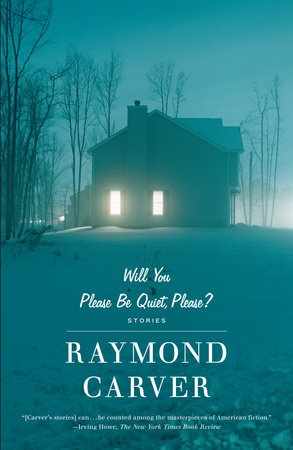 Amb la seva primera col·lecció de contes, Raymond Carver va donar nova vida al conte americà. Carver mostra l'humor i la tragèdia que habita en els cors de la gent comuna; les seves històries són els clàssics del nostre temps.


